Non Gamstop PayPal Casinos: the Wallet and the Licence Record
The bench tests non Gamstop PayPal casinos as two documents: a wallet rail that clears in minutes and a licence record that leaves Britain's protections at the door.
Offers, bench-tested
Four operators on the bench at a time: each one read against its own published terms - the entry price, the wagering load, the rails, the payout window. The readings are ours; the offers are quoted in the operator's own words.
Every card carries its reading on a 10-point dial plus four axis chips - terms, payments, withdrawal and licence. Offers move often - the operator's own page is always the current truth.

Low-deposit welcome: £5 in, 40 spins included, 35x on winnings
- Termsmid-band
- Payments3 rails
- Withdrawal0–24 hours
- Licenceoffshore

Cashback welcome on slots, wagering 30x, cap £150
- Termsmid-band
- Payments3 rails
- Withdrawal1–2 days
- Licenceoffshore

Welcome package 100% up to £100 + 50 spins on first deposit
- Termsmid-band
- Payments3 rails
- Withdrawal1–3 days
- Licenceoffshore

Crypto welcome 150% up to £500, 40x, instant rail
- Termsmid-band
- Payments3 rails
- Withdrawal2–4 days
- Licenceoffshore
Cards appear in dial order, alphabetical order breaking ties. The dial visualises published figures, not a promise; nothing here is a recommendation to gamble, and the operator's own terms decide every claim.
The spec sheet: a wallet rail and a licence record
Two documents make up the spec here, and the bench reads them in order. The first is the rail: PayPal as the deposit and payout method, prized by players because the wallet sits between the bank and the room. The second is the licence record: the paperwork that says what stands behind the balance once the money has moved. British rooms print a UK licence and the protections that follow it; the rooms on this page print offshore papers, and the difference between the two documents is the whole subject of the sheet.
Availability is the first reading, and it needs hedging. At the time of writing, rooms operating offshore that carry PayPal are a minority of the shelf: the wallet has historically signed only operators able to show tighter paperwork than the offshore floor demands, so its presence at a room is a meaningful signal about that room's compliance posture - a signal, not a guarantee. Where the rail is offered it typically behaves as it does anywhere: instant deposits, £0.00 fees on the standard funding route, and payouts returned to the same wallet.
The licence record gets read second, but it decides more. An offshore licence is a real licence - the operator answers to a regulator somewhere - while it is not British, and the protections a British licence carries do not follow the player across. What the offshore record commits the operator to, what it leaves to the operator's own discretion, and where a complaint travels when one is needed: those three rows belong on the spec sheet beside the rail, and the rest of this page measures them.
The rail on the bench: deposits, payouts, fees
Deposit readings come first because they are the simplest. A PayPal deposit at the modelled room credits at once, carries £0.00 in rail fees on the standard route, and needs no card details handed to the room - the wallet stands between. The practical benefit is containment: the room sees a funded wallet, not a bank account, and the player's funding source stays off the room's paperwork. None of that changes what the deposit costs; it changes how much of the player's financial surface the room ever touches.
Payout readings take longer and depend on two clocks in series. The first is the site's own review window - offshore rooms commonly state theirs in days rather than hours, and the terms, not the cashier banner, hold the real figure. The second is the wallet leg itself, which once released typically lands the same day or the next working day. The bench records both windows separately, because a room that reviews for three days and pays in minutes is a different product from one that reviews in hours and pays slowly, and only the first figure is printed where players actually look.
The no-deposit tier sits one shelf down from the rail questions, and the entry offer before any money moves reads the same rooms from the other end: what a room gives for £0.00, and what terms govern it. The two sheets agree on the central point - the rail's convenience is real, and so is the paperwork question behind it. A player testing this page's subject with nothing at stake first is running a sensible order of operations: measure the room's terms at £0.00, then fund the wallet only if the sheet survives the reading.
Bench at a glance: Non Gamstop PayPal Casinos: the Wallet and the Licence Record
- Governing spec
- Promo terms + general terms
- Licence reading
- Named in the footer, check the register
- Exclusion reading
- Site-level limits only
- Cap reading
- Commonly £50-£100 on free credit
- Recourse reading
- Operator first, regulator second
The measurement: one rail run, counted
The sample run stays deliberately small so every figure stays checkable: £40.00 deposited through PayPal, a £40.00 match accepted, a clearing run at the ceiling, one withdrawal request back to the same wallet. The room is modelled - figures come from the sheet's own typical bands, hedged where rooms differ - and the exercise measures the receipt's shape, not the profit row. The shape reads: what moves in, what the terms add, what the terms delay, and what stands behind the balance at the end of the run.
The rail run, counted:
- Paid in: £40.00 through PayPal, £0.00 rail fee, credited to the balance at once.
- Matched: £40.00 of bonus credit at 35x = £1,400.00 of required turnover before conversion.
- Pace: 700 rounds at the £2.00 ceiling clears the multiple - 50 a day is 14 days.
- Out: a £90.00 withdrawal to the same wallet, review commonly inside 72 hours, payout next working day.
- Behind the balance: zero British institutions - the papers sit offshore and the ombudsman route does not follow.
Read the counted rows in order and the rail's role comes into focus. The wallet moved £40.00 in and, on the modelled sheet, £90.00 out, at £0.00 fees in both directions and one working day on the final leg - the rail did its job. Everything that slowed the run lived in the terms: 35x on the bonus, a 14-day clearing pace at the ceiling, a review window measured in hours on the modelled room and in days on slower sheets. Grade the rail for what it carries; grade the room for how it releases.
Every figure in the receipt traces to a printed row: the deposit and its fee to the cashier page, the multiple to the bonus terms, the ceiling to the wagering section, the review window to the payout terms. Where a room's sheet goes quiet - no printed window, no printed ceiling - the bench marks the reading incomplete rather than guessing, because a modelled figure fills a shortfall in the measurement and a guessed one poisons it. Incomplete sheets fail on completeness, not on friendliness; the arithmetic cannot run on blanks.
The exclusion boundary: what the register does not reach
The boundary is the first thing to state plainly. The national self-exclusion register covers rooms holding British licences; rooms operating offshore sit outside its reach, and a registration does not stop an account being opened there. Some offshore rooms offer their own exclusion tools, but those switches are the operator watching itself on a timetable only it sets, checked by nobody outside the company. For a player whose exclusion runs through the national scheme, that boundary is not one factor among many on this page; it is the reading that decides the page.
The wallet does not close the boundary either. PayPal's presence says something about the room's compliance posture, but the wallet is a courier, not a regulator: it moves money and keeps records, and it does not stand behind a balance. the PayPal wallet, graded under a British licence measures the same rail inside the regulated market, where the licence behind it carries ombudsman recourse and statutory protections; set that sheet beside this one and the rail grades identically while the paperwork grades differently. Same courier, different cargo behind it.
Practical readings follow. A player who has self-excluded through the national scheme should treat the offshore shelf as outside that protection in both directions: the register will not block the room, and the room's own tools will not answer to the register. Setting limits before the first deposit - deposit caps in the room's safer-gambling tools, a separate budget outside the wallet - is the control that survives the boundary. The bench records which controls a room actually prints, because a room that prints none has made its tolerance reading for you.
| Brand | Welcome offer | Wagering | Min dep. | Withdrawal | Payments | Licence | Dial |
|---|---|---|---|---|---|---|---|
| Party PokerCheck the terms first | Bet £10 get £30–£40 (typical) | 35x typical | £10–£20 | 1–3 working days | Visa · Mastercard · PayPal · Bank transfer | UKGC | 7.6 / 10 |
| Admiral CasinoCheck the terms first | Matched deposit up to £/€200 (typical) | 30x–40x by product | £10 | 24h e-wallets, 2–5 days cards | Visa · Mastercard · Neteller · Pay by mobile | UKGC | 7.5 / 10 |
| All British CasinoCheck the terms first | Bet £10 get £30–£40 (typical) | 40x typical | £10–£20 | 1–3 working days | Visa · Mastercard · PayPal · Apple Pay | UKGC | 7.3 / 10 |
| JackpotCityCheck the terms first | 100% up to €/£100 + 50 spins (typical) | 30x typical | €10–€20 | 2–5 working days | Visa · Mastercard · Trustly · Bank transfer | Offshore | 6.3 / 10 |
| 10betCheck the terms first | 100% up to €200 + spins (typical range) | 40x typical | €20 | 1–3 working days | Visa · Mastercard · Skrill · Neteller | Offshore | 6.1 / 10 |
| 777 CasinoCheck the terms first | £30–£50 in free bets (typical range) | 40x typical | £10 | Under 24h e-wallets | Visa · Mastercard · PayPal · Apple Pay | UKGC | 5.7 / 10 |
| LottoGoCheck the terms first | Free bets / credits on first ticket (typical) | 40x on bonus funds | £10 | 24–48h e-wallets | Visa · Mastercard · Neteller · Pay by mobile | UKGC | 5.7 / 10 |
| Voodoo DreamsCheck the terms first | Bet £10 get £30–£40 (typical) | 40x typical | £10 | Under 24h e-wallets | Visa · Mastercard · Neteller · Pay by mobile | UKGC | 5.7 / 10 |
| MystakeCheck the terms first | 100% up to €/£1,000 + spins (typical range) | 35x typical | €20 equivalent | Under 24h on crypto | USDT · BTC · ETH · TRX · Visa | Offshore | 5.5 / 10 |
| RoobetCheck the terms first | Matched deposit up to €/£500 + spins (typical) | 35x typical | €10 equivalent | Under 24h on crypto | BTC · ETH · USDT · MuchBetter | Offshore | 4.9 / 10 |
| RainbetCheck the terms first | Crypto match up to 1 BTC equivalent (typical) | 40x typical | €20 equivalent | Under 24h on crypto | BTC · ETH · USDT · MuchBetter | Offshore | 4.5 / 10 |
Where the protections run out
The protection gap has four edges, and the bench measures each. First, recourse: a dispute at an offshore room travels to the regulator that issued the paperwork, and no British ombudsman scheme takes the case. Second, limits: affordability and friction thresholds are the operator's own, set independently and commonly looser than the frictionless and enhanced checks British rooms run under national rules since August 2023 and February 2024. Third, payment protections: the buyer cover a wallet is commonly known for is typically scoped to goods and services, not to stakes lost. Fourth, currency of last resort: there is no British regulator behind the balance.
Each edge has a player-side control, and the gap does not close but narrows. Recourse improves with records: dated receipts, saved terms, screenshots at the moments that matter - the file that answers a frozen payout. Limits improve with pre-commitment: caps set in the room's tools on the day of registration, before any losing session argues for raising them. Payment exposure improves with routing: funding the wallet from a dedicated balance rather than the main account keeps the surface small. None of these is a regulator; all of them are controls the player holds outright.
The credit rail deserves its own reading here. Since April 2020 Britain has prohibited gambling on credit cards, and rooms licensed offshore may still accept them - an acceptance the bench records as a risk flag, said plainly and never dressed as a feature. A wallet funded from a credit line reintroduces, at one remove, exactly what the British ban was written to stop: staking money that is not yet yours. The reading is mechanical: fund the wallet from money that is already yours, and the flag never rises.
The grade: rail high, paperwork low, stamped apart
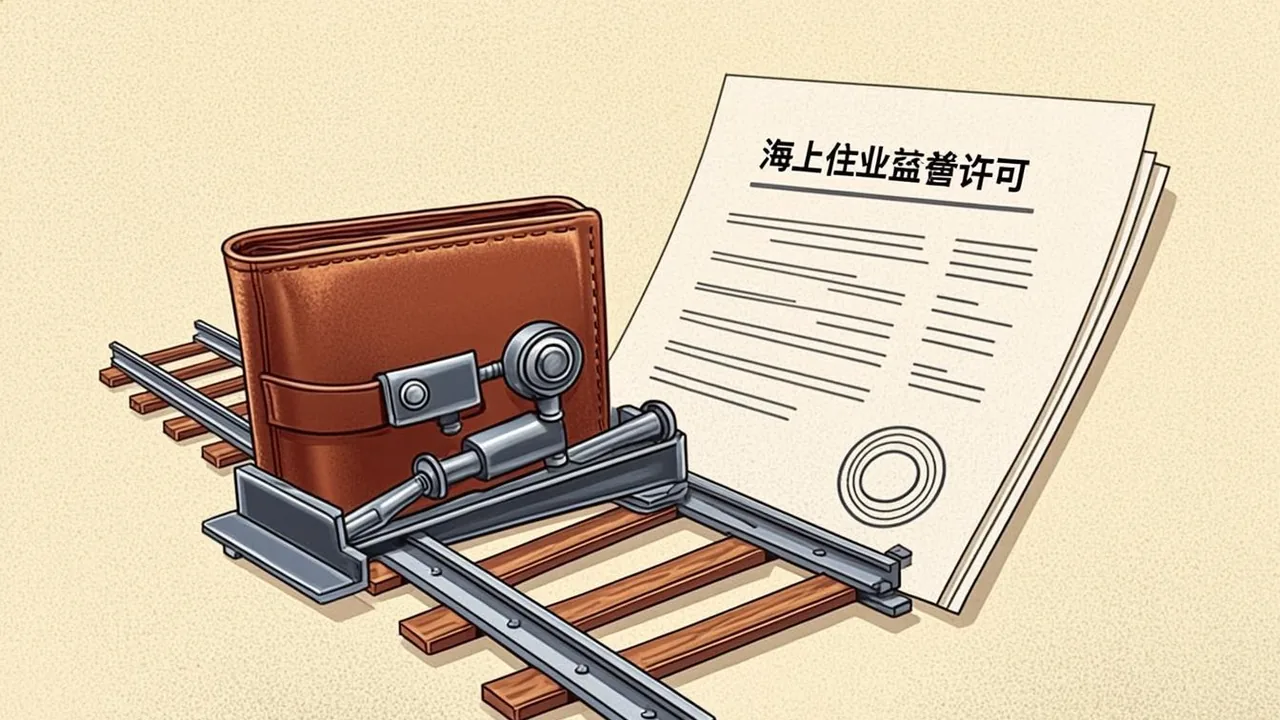
Grading the two halves separately is the honest way to stamp this page. The rail grades high on its own spec: £0.00 standard fees, instant deposits, next-day payouts once released, records on both sides of every movement, and a funding surface the room never fully sees. The paperwork grades low on the same sheet: no British regulator behind the balance, no ombudsman route, self-set thresholds across the safer-gambling tools. A high grade on the rail does not average against a low grade on the record; the bench carries both numbers and lets neither cancel the other.
Against the wider offshore shelf, rooms carrying PayPal typically sit toward the orderly end of the distribution: the rail's presence correlates, at the time of writing, with rooms whose other papers - terms, exclusion tools, payout windows - tend to read more completely than the shelf's floor. The board above sorts that distribution room by room, and the pattern holds across it: the rail is a useful signal, and a signal is not a substitute for reading the sheet yourself. Correlation prices a shortlist; the terms close it.
The stamped grade, then: PayPal at an offshore room passes the rail test and fails nothing the player can see, while the licence record changes what stands behind every pound the rail moves. For a player whose priority is the funding route, this corner of the shelf offers the best of the offshore papers with the strongest rail on it. For a player whose priority is protection, the same corner is still the offshore shelf, and the gap described above does not close at any price the rail charges. Both readings are true; the player picks the weight.
Re-running the test before the wallet funds
Run the checks in a fixed order and the whole page compresses into ten minutes. Read the licence record first and find the regulator named on it. Read the cashier second and confirm PayPal appears on both the deposit and the withdrawal lists, not one. Read the bonus terms third: multiple, ceiling, cap, window, printed in numbers. Read the payout terms fourth: review window, rails, any fee the room charges. Four readings, in a fixed order, and every one of them is checkable against the page the room actually publishes.
The test deposit closes the reading. £10.00 through the wallet, held for a day, then requested back - the run measures the whole loop end to end: how the deposit credits, whether the cashier's timings match the terms, how the review treats a small payout, how the money lands. A room that passes a £10.00 loop cleanly has published a sheet its cashier can honour; a room that stalls a £10.00 loop has told the player everything the bonus page omitted. The loop costs pennies and returns the most expensive figure on the page: the truth.
Records made during the test carry forward. Save the terms as issued on the day, screenshot the cashier's stated windows, keep the wallet's own receipts - PayPal keeps its side automatically, which is one of the rail's quiet advantages over rails that leave no paper. The board above lists rooms whose sheets survived this order of checks; the listed casinos' terms belong in the same dated folder as the wallet receipts, so that any later disagreement is argued with documents rather than with memory. The file, not the wallet, is what a dispute actually spends.
Frequently asked questions
Do non Gamstop PayPal casinos actually exist?
Yes, though they are a minority of the offshore shelf at the time of writing. PayPal has historically signed only operators able to meet tighter requirements than the offshore floor demands, so rooms carrying the wallet tend to sit at the orderly end of the market. That is a signal about compliance posture, not a guarantee of protection: the licence behind the room is still an offshore one, and everything this page measures about the protection gap applies regardless of which wallet the cashier accepts.
Is my balance protected if the site is not on GAMSTOP?
Not by the register, and not in the way a British licence protects one. The national self-exclusion register reaches rooms licensed in Britain only, and an offshore licence puts the balance under a regulator abroad rather than a British one: no UK ombudsman, no statutory protections, thresholds set by the operator. The practical controls are the player's own - pre-set deposit caps, a dedicated funding balance, a dated file of receipts and terms. The wallet moves the money; it does not stand behind it.
How fast are PayPal withdrawals at these rooms?
Two clocks run, and only one is printed where players look. The wallet leg itself is fast: once a payout is released, the money typically lands the same day or the next working day. The release is the variable - offshore rooms commonly state review windows in days rather than hours, and the honest figure lives in the payout terms, not the cashier banner. A test withdrawal of a small amount, requested before any large stake, measures the whole loop for the cost of a stamp.
Will PayPal buyer protection cover a gambling dispute?
Typically not. Wallet buyer cover is commonly scoped to goods and services that arrive as described, and a lost stake is not a goods dispute; gambling losses are widely excluded from those schemes. That is one edge of the protection gap this page measures: the rail is excellent at moving money and deliberately quiet about adjudicating bets. Disputes at an offshore room route to the regulator named on the licence, and the player's own records - receipts, screenshots, saved terms - are the evidence that regulator will actually read.
Does GAMSTOP block these sites?
No. Coverage under the national scheme stops at rooms licensed in Britain, and offshore-licensed sites sit outside its reach entirely, so a registration does not prevent an account at the rooms on this page. Some offshore operators provide their own exclusion switches, but those tools are enforced by the company that profits from staying open, on its own timetable. Anyone who joined the national scheme because they needed to should treat that boundary as the first measurement on this page, not one factor among many.
What should I check before depositing £40?
Four readings, in a fixed order. The licence record: which regulator is named, and is it real. The cashier: PayPal on both the deposit and withdrawal lists, and the printed review window. The bonus terms: multiple, ceiling, cap, expiry, in numbers rather than adjectives. The exclusion tools: what limits the room lets you set before the first deposit, because the offshore shelf sets its own thresholds. Then run a £10.00 test loop - in, out, timed - before the £40.00 moves, and keep the receipts.